.webp?width=249&height=77&name=Britannia-logo%20(1).webp)
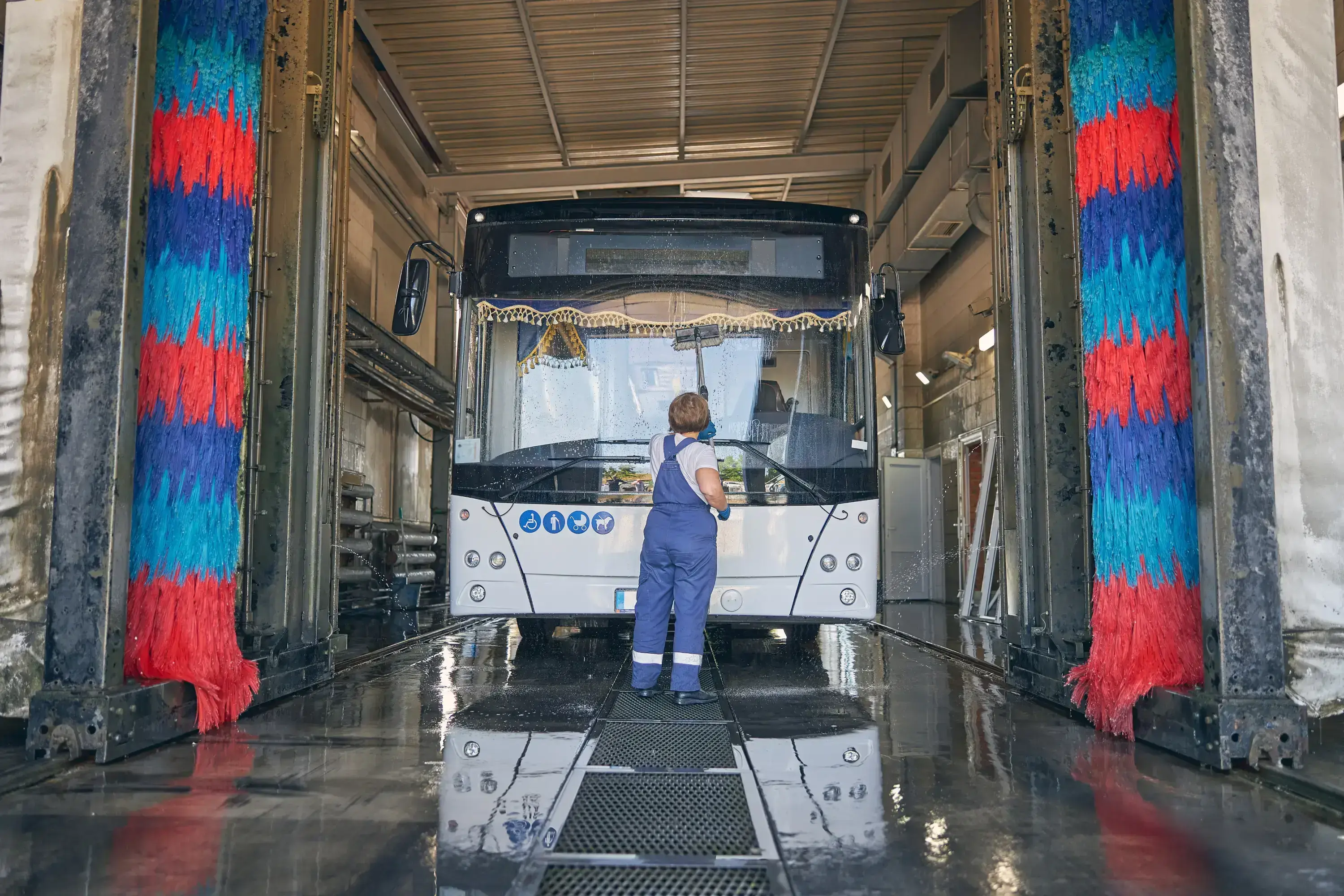
Many commercial fleets include a mix of different vehicles, including minibuses, coaches, double-decker buses, vans, HGVs, and mobile plant. This means that the vehicle wash system has to accommodate a wide range of sizes, heights, and special requirements while still retaining its operational efficiency. The way to do this is to set up custom wash programmes for your different vehicle categories, but what is the best way to do this? Incorrect programme selection can waste time for your drivers and operators, reduce cleaning consistency and risk pitting the wrong wash process against the wrong vehicle profile. Read on as we explain how to set up the best wash programme cycles for mixed vehicle fleets.

1. Group Vehicles By Wash Requirement
Vehicle type is a good starting point for organising your wash programmes, but it shouldn’t be the only criteria you use. This is because two vehicles of the same type may need quite different wash cycles depending on how they are used. A commercial ‘white van’ doing light courier work, for instance, may only need a standard exterior wash, while a similar vehicle returning from deliveries to a muddy construction site may need a heavier wash programme with extra dwell time, pre-wash, or even a second pass.
This is why many depots find it better to group their vehicles by wash requirement; so that the programme structure separates light daily dirt and standard road film from heavy operational soiling and winter salt removal, and from vehicles requiring special care because of age, fittings, or bodywork. This makes the wash decision reflect the condition of your vehicles, rather than relying on broad fleet categories that may not match operational reality. Grouping your vehicles in this way also helps avoid over washing, as not every vehicle will need the longest or most intensive cycle. A strict distinction between routine cleaning and heavy-soiling cycles will help reduce your water and chemical use, as well as minimising avoidable wear on your vehicle wash systems – while still giving your operators the right options when a vehicle genuinely needs more cleaning effort.
2. Use Clear Programme Names That Drivers Understand
A simple point, but an important and often overlooked one. Ideally, programme names should be written for the people selecting them, not for engineers or system installers. Abstract labels such as Cycle 1, Enhanced, or Premium can leave too much room for interpretation – and thereby mistakes. Which cycle does the vehicle genuinely need in this instance? A driver under time pressure should not have to guess which setting applies.
Intuitive naming reduces the risk of wrong-cycle selection – e.g. standard exterior wash, heavy mud wash, underbody wash, no roof equipment wash, or heavy soil cycle. The name should describe either the vehicle condition, the wash action, or the restriction that matters. It’s also important to make your cycle programmes easy to find on the control panel, and specialist or intensive cycle should not sit in a position where they can be selected accidentally.
3. Control Access To Specialist Cycles
Access control isn’t always something that operators consider when it comes to their vehicle wash systems. However, it makes sense the not every wash programme should be available to every user. Specialist cycles may involve higher water pressure, longer cycle times, stronger chemical applications, or settings designed for individual vehicle profiles. If these cycles are selected casually, they can waste time and resources, as well as increasing avoidable risk for vehicles with non-standard fittings. Supervisor permissions help protect your settings, so that higher risk choices require a deliberate approval step before instigation. Side wash only cycles are a good example. These can be useful if roof mounted equipment or fragile upper structures make a full wash inappropriate. However, if drivers start using side washing as a shortcut for vehicles that ideally need a full clean, your wash quality will drop. Restricting or clearly labelling this cycle will help preserve it for the right reasons.
4. Build Driver Prompts Into The Process
The wash, water reclamation and reuse programme is only one part of your control system. Your drivers also benefit from clear visual prompts before they enter the automated wash bay. These prompts should cover all the checks that affect safety, such as mirrors, windows, cameras, aerials, loose fittings and correct entry position. Any prompts on the bay should be practical, concise, and clearly visible, and many depots build them into signage, control-screen instructions, driver CPD sessions, and supervisory checks.
Make the wording direct and clear wherever possible – e.g. ‘stop if vehicle is outside marked guide position’. Entry position is especially critical when dealing with mixed fleets or busy depots. If a vehicle is not aligned properly, the vehicle wash system sprays, brushes, and sensors may not work as intended, or the driver may have to waste time and cause congestion by backing up. Simple ground markings, guide rails, and stop points will help reduce incorrect positioning before the wash cycle starts, and bay-side lighting is another important feature to consider if you use your vehicle wash system overnight or during the winter.
Get In Touch
Mixed fleets need wash programmes that match their real-world operating conditions. If you would like advice about optimising your wash cycles, please speak with one of our specialists about configuring the vehicle wash system around your fleet mix, so your drivers and supervisors have the right options in place.
